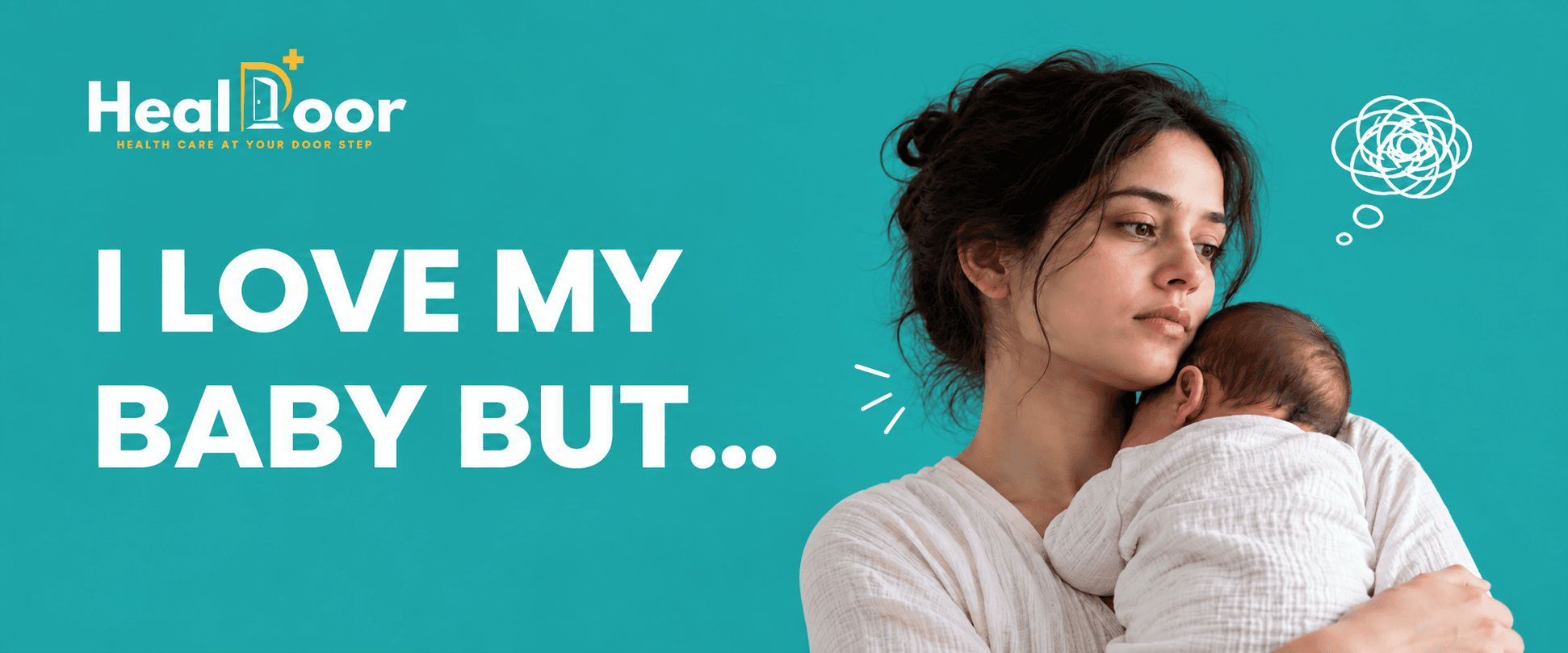
Three weeks after bringing her son home, Aditi finally said out loud what she had been feeling. She loved her baby. But most mornings she felt disconnected, exhausted in a way that sleep did not fix, and guilty for not feeling the joy everyone expected.
She assumed it was normal new-mother tiredness. It was not. Once she understood what was actually happening, getting help became much simpler.
Postpartum Depression Meaning: How It Differs From the Baby Blues
Postpartum depression (sometimes written as post partum depression) is a mood disorder that can begin in the weeks or months after childbirth.
It is different from postpartum blues, often called the baby blues. The blues are mild, short-lived low moods that many new mothers feel in the first two weeks, and they usually fade on their own.
Postpartum depression lasts longer and feels heavier. It does not go away just by waiting, which is why Aditi's first three weeks felt so confusing.
Postpartum Depression Symptoms
For Aditi, the main signs were feeling disconnected and constantly exhausted. For other mothers, postpartum depression symptoms can look like:
• Persistent sadness or a feeling of emptiness
• Difficulty bonding with the baby
• Irritability or anger that feels out of character
• Changes in appetite or sleep that have nothing to do with the baby's schedule
• Constant worry or racing thoughts
That last point matters. Postpartum depression and anxiety often appear together, so the anxiety can be missed if everyone is only watching for sadness.
It is also not limited to mothers. Postpartum depression in men is real, even though it is rarely discussed.
Postpartum Depression Screening Test: The First Step
Aditi's diagnosis began with a short postpartum depression screening test. Many doctors use this questionnaire in the weeks after birth because most mothers do not bring up these feelings on their own.
It takes only a few minutes and gives the doctor a clear starting point for the next conversation.
Postpartum Depression Treatment and Counseling
Postpartum depression treatment usually combines counseling with medical support. In some cases, a doctor may also recommend medication, depending on the individual situation.
For Aditi, postpartum depression counseling meant regular sessions with a postpartum depression therapist. Having one consistent person to talk to meant she never had to start from scratch.
Later, she joined a support group and heard other mothers describe the same feelings she had felt guilty about. That alone was a huge relief.
Postpartum Recovery and Finding Support in Delhi NCR
Postpartum recovery is not only physical. Emotional recovery deserves the same attention.
If you are searching for a postpartum depression therapist near me or postpartum depression treatment near me in Delhi NCR, it can be hard to compare options from search results alone. HealDoor's Postpartum Depression program brings physician and psychologist support together, so a new mother does not have to arrange everything on her own.
Frequently Asked Questions
Q: How long does postpartum depression last?
There is no fixed postpartum depression duration. Without support, it can continue for many months. With early counseling and treatment, many mothers start to feel better sooner, though every recovery is different.
Q: Is it the baby blues or postpartum depression?
The baby blues are mild and usually fade within about two weeks. If low mood, anxiety or exhaustion continue beyond that, or feel severe, speak to a doctor.
Q: Can postpartum depression affect fathers too?
Yes. New fathers can experience it as well. The warning signs are similar and deserve the same attention.
Q: Are there postpartum depression support groups?
Yes. Postpartum depression support groups are a common part of recovery and work well alongside individual counseling. Hearing others share the same experience reduces guilt and isolation.
Q: How do I find a postpartum depression therapist near me?
Look for a therapist or program with specific experience in postpartum mental health, not just general counseling. In Delhi NCR, HealDoor's program connects you with the right support directly.
Q: When should I seek help urgently?
If you ever have thoughts of harming yourself or your baby, seek medical help immediately. This is a medical emergency, not a sign of weakness.
Conclusion
Aditi's turning point was not dramatic. She simply named what she was feeling instead of waiting for it to pass. That is often the first real step in postpartum recovery. If her story feels familiar, you do not have to wait either.