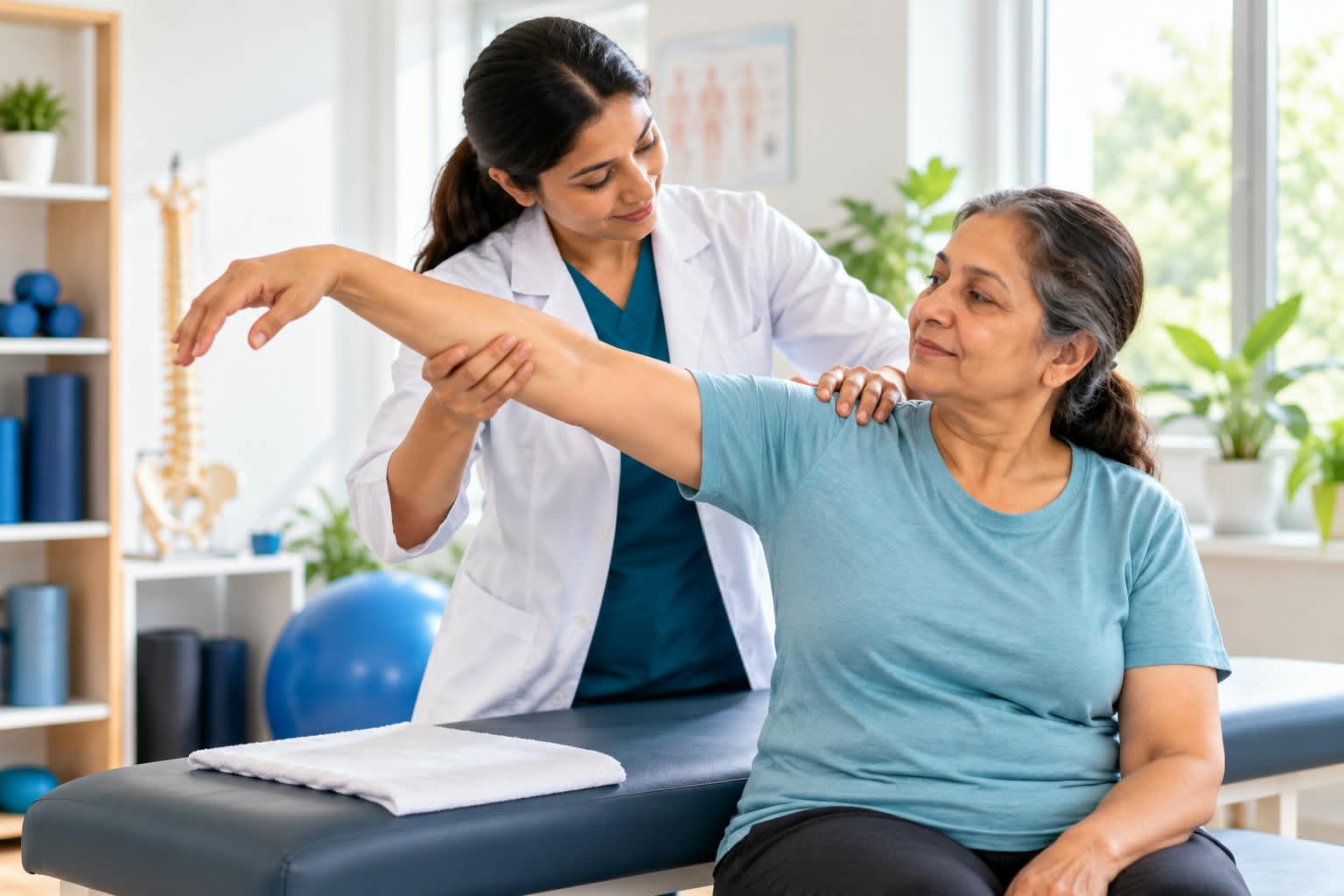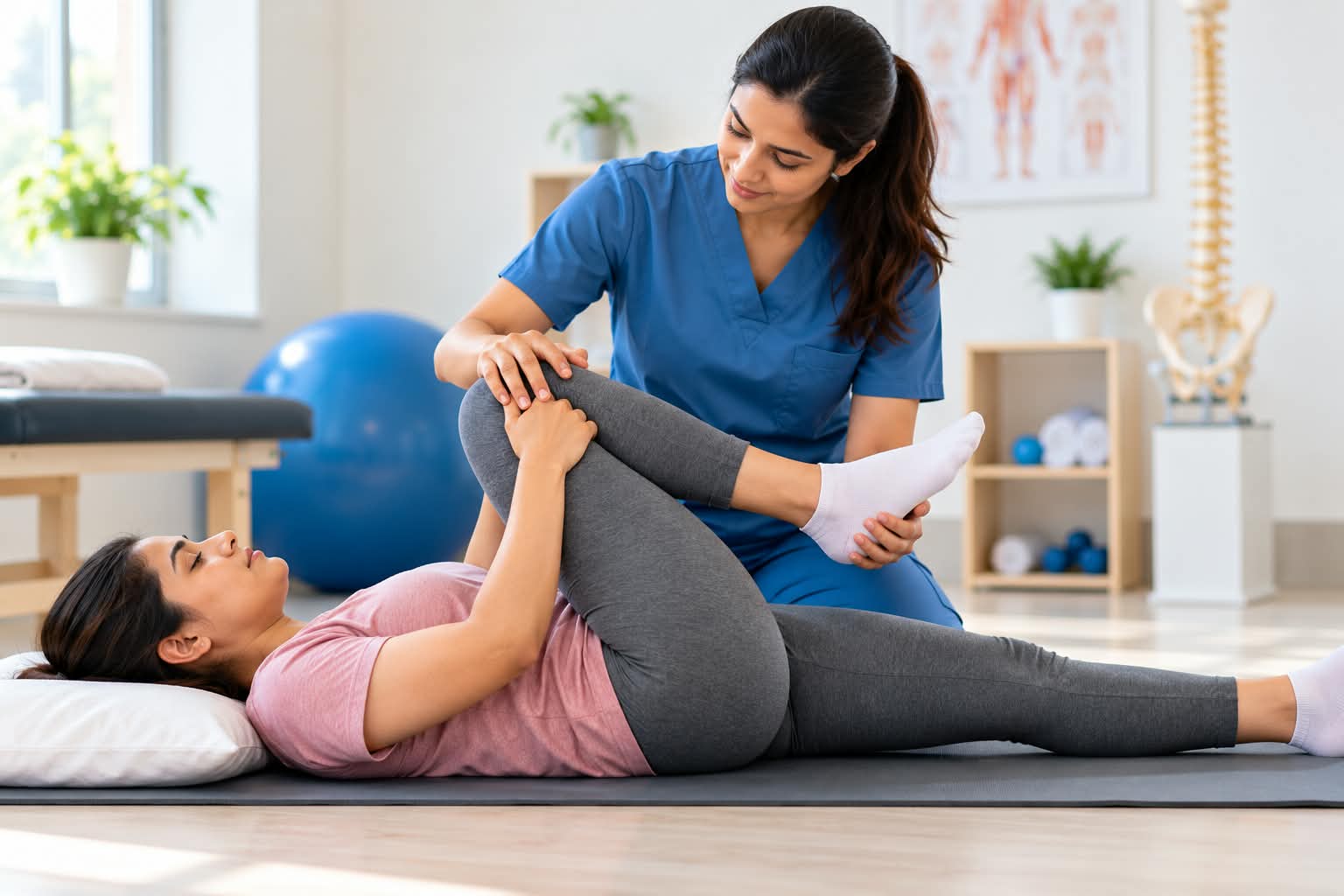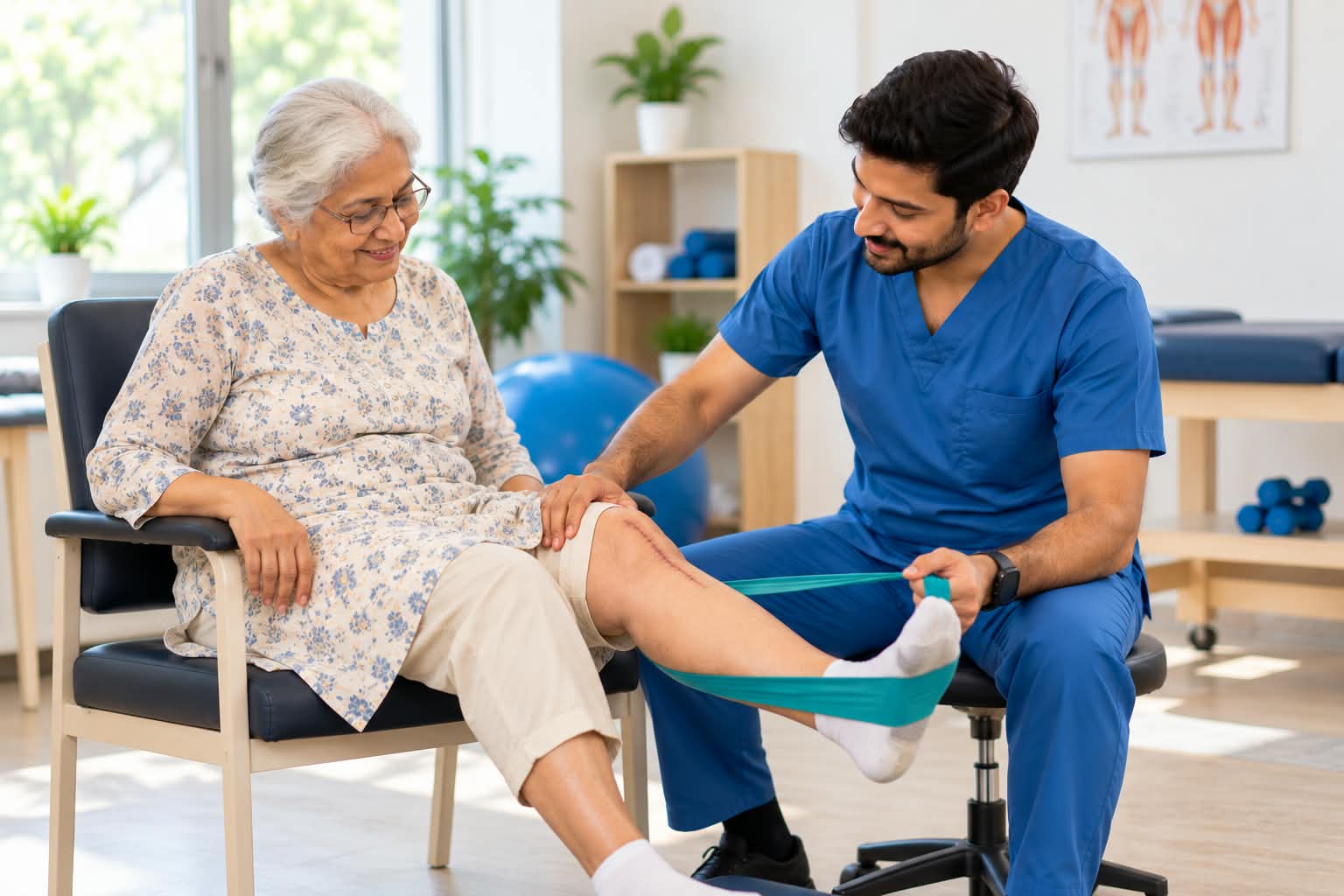
A true story from my practice, shared anonymously, about what happens when rehabilitation after knee surgery is put off.
Author :- Dr Shikha Chadha (PT)
Mrs. Sunita (name changed) was 48 years old. Her daughter-in-law was the one who booked a home physiotherapy session for her, because Mrs. Sunita could no longer walk much and was finding it hard to manage on her own. When I reached their home, the first thing I noticed was how much of her independence had slipped away.
A Knee Surgery and a Delayed Start
My first question was a natural one. At 48, why had she needed knee surgery at all? She told me about an accident about a month and a half earlier. She had suffered a major fracture of her left knee, and surgery had followed. It is not a common story at her age, and it showed me how suddenly a person's life can change.
My second concern was timing. It had been about a month and a half since her surgery, and she had not started any physiotherapy. I asked why. Her daughter-in-law told me, honestly, that the surgeon had advised physiotherapy, but the family felt it was not needed and let it slide. I did not blame them. Most families want to protect a recovering patient from pain and effort, and rest feels like the kind choice.
But they were now paying the price for that delay. Mrs. Sunita could not move her knee much, she had difficulty walking, and everyday independence, such as getting around the house on her own, had become a struggle.
Physiotherapy After Knee Replacement or Knee Surgery: Why Rehabilitation Matters
This is exactly why rehabilitation matters after surgery. The operation fixes the structure of the knee, but it does not give back movement and strength by itself. Without guided rehabilitation, a knee can stay stiff, the muscles around it weaken, and walking becomes harder with every week.
Physiotherapy after knee replacement, or after any major knee surgery, supports mobility and daily function, and it works alongside the surgical team's guidance, not in place of it.
What Recovery May Involve
We did not rush. Recovery after knee surgery usually involves, as prescribed for the individual:
• supervised movement
• walking practice
• range-of-motion work
• gradual strengthening
For Mrs. Sunita, I used:
• PNF techniques to improve the range of motion in her knee
• weight-bearing exercises
• balance and gait training to help her walk with more confidence and safety
Every step was part of a structured, progressive plan. We moved ahead only as her knee and her confidence allowed, and I adjusted the work as she responded.
Following Your Surgeon's and Physiotherapist's Plan
I also spoke to the family about something I want every reader to hear. Recovery is individual, and no two knees heal at the same pace.
Your surgeon and your physiotherapist will give you precautions that are specific to your surgery, and it matters to follow them, and to keep your follow-up appointments, even on days when you feel you do not need them. Those visits are how problems are caught early. Skipping the plan, or starting late, rarely saves anyone time.
Tips for Practising Safely at Home
Between visits, practising at home can help, but it should be done safely.
• Follow the programme you have been given, not a generic routine.
• Use your walking aids exactly the way you have been shown, and do not give them up early because you feel impatient.
• If an exercise causes sharp or increasing pain, stop and tell your physiotherapist.
You will find many videos for knee pain exercises online, but the right physiotherapy exercises after surgery depend on your operation and your stage of healing, so a movement that suits one person may not suit another.
When to Call for Help
Contact your care team if you notice:
• increasing redness around the wound
• discharge from the wound
• a fever
• swelling or pain that keeps getting worse
SEEK URGENT HELP If you ever have sudden breathlessness, chest pain, or severe pain or swelling in the calf, seek emergency medical assessment immediately. Those signs need urgent care, not a wait-and-see approach.
Frequently Asked Questions
Q: When should physiotherapy start after knee replacement surgery?
Ask about physiotherapy early, and start it when your surgical team says it is time. Your surgeon and physiotherapist will give you precautions specific to your surgery. Mrs. Sunita started about a month and a half after surgery, and by then her knee had become stiff and walking had become difficult.
Q: What does physiotherapy after knee surgery involve?
Recovery usually involves supervised movement, walking practice, range-of-motion work and gradual strengthening, all as prescribed for the individual. For Mrs. Sunita it included PNF techniques, weight-bearing exercises, and balance and gait training.
Q: Can I do knee pain exercises at home after surgery?
Practising at home can help, but follow the programme you have been given, not a generic routine from a video. The right exercises depend on your operation and your stage of healing. If an exercise causes sharp or increasing pain, stop and tell your physiotherapist.
Q: Do I still need follow-up appointments if I feel fine?
Yes. It matters to keep your follow-up appointments even on days when you feel you do not need them, because those visits are how problems are caught early.
Q: What warning signs should I watch for after knee surgery?
Contact your care team for increasing redness around the wound, discharge, fever, or swelling or pain that keeps getting worse. Sudden breathlessness, chest pain, or severe pain or swelling in the calf needs emergency medical assessment immediately.
Conclusion
Mrs. Sunita's story is the reason I tell families not to delay. When a surgeon recommends rehabilitation, it is part of the treatment, not an optional extra.
If you or someone in your family has had knee surgery, ask about physiotherapy early, and start it when the surgical team says it is time.
If you would like help, book an assessment at home or in the clinic, and we will plan the next step together. HealDoor offers physiotherapy at home and at its Rohini West clinic.